
History of Rice: From Origin to Iranian Tables
Rice is one of the most important grains in the world, consumed as a staple food by more than half of the world's population.
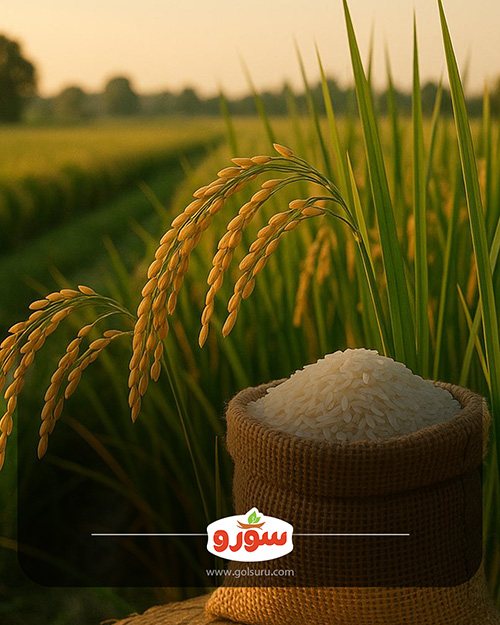
Rice is one of the most important grains in the world, consumed as a staple food by more than half of the world's population. In this article, the media Gol Suru discusses the history of rice. Today, rice not only plays a key role in nutrition but also has an intriguing and mysterious history. Especially for us Iranians, who hold rice in special regard on our tables, knowing its origins and how it spread in the world and Iran can be very interesting.
The origin of rice in the world
Although there is disagreement about the exact point of origin of wild rice, most researchers believe that this plant grew wild in East Asia and Africa over 14,000 years ago. However, the oldest archaeological evidence of rice cultivation dates back to about 9,000 years ago in China (Yangtze River Valley). After the domestication of rice in East Asia, this product gradually spread to South and West Asia and then to Europe.
Interestingly, rice cultivation in Europe is relatively recent, first being cultivated in England in the 13th century. Even the English word 'Rice' has Greek roots. With the discovery of the Americas and their colonization by Europeans, rice was also introduced to this region. In 1649, rice was first cultivated in the state of Carolina, USA, where African slaves played a significant role in its production.
Today, India and China are the largest rice producers in the world, and about 60% of global consumption belongs to Asia. Some theories also suggest that the origin of rice is Australia, but there is no strong evidence for this claim, and East Asia remains recognized as the main cradle of rice.
History of rice in Iran
Rice holds a special place in Iran and is one of the main food staples on Iranian tables. Although the exact time of rice's arrival in Iran is not clear, evidence shows that rice cultivation has been prevalent since at least the Achaemenid period. At that time, the regions of Khorasan and Mazandaran were the main centers of rice cultivation, but Gilan did not play a role in the production of this product during that period.
There are various narratives about the beginning of rice cultivation in Gilan. Masoud Pourhadi mentions in his book 'The Food Culture of the People of Gilan' that rice was brought to Gilan from India during the Sassanid period by Barzoyeh the physician. However, the spread of rice cultivation took until the late Sassanid period, as the people of Gilan primarily lived through hunting and animal husbandry before that.
Historical writings, such as the report of Ibn Athir, also indicate that rice cultivation was prevalent in Gilan in the 4th century AH. He refers to a story in which Mardavij Ziyari sends a messenger to bring his brother Washmgir to Gilan, finding him cultivating rice in muddy fields.
The oldest written document about the history of rice in northern Iran belongs to Ali ibn Sahl Tabari, a Mazandarani physician of the 2nd century AH. He mentions the nutritional properties of rice in his book 'Firdaws al-Hikmah' and even refers to rice in Tabaristan that was 40 years old!
Rice in the Safavid period and the modern cooking method
The method of cooking rice in the modern way (polo) became popular during the Safavid period in Iran. At that time, rice was cooked as an aristocratic dish in the courts of Safavid kings and served alongside lavish meals.
With a history of 14,000 years, rice is one of the oldest edible plants and the second source of nutrition in the world after wheat. In Iran, this product has been cultivated for at least two thousand years and has always held a special place in our culinary culture. From the rice paddies of Gilan and Mazandaran to the colorful tables of Iranians, rice is not just a food but a part of our identity.

Comments
No comments yet.